

Arkansas
Advancing Wind Energy in the Natural State
Arkansas: The Next Wind Energy Hub of the Southeast
Arkansas is emerging as a new frontier for wind energy in the Southeast, leading the region in the number of land-based wind projects under development. The agricultural Mississippi Delta Region, in particular, offers some of the highest wind resource potential at both 110 and 140-meter hub heights, setting the stage for significant growth in wind development.
Arkansas Overview
Currently, the Natural State has over 1.9 gigawatts (GW) of wind energy under development, including the 135 MW Crossover Wind project in Cross County. In northeast Arkansas, the proposed Nimbus Wind project in Carroll County would bring another 180 MW to the state. Arkansas is uniquely positioned as the only landlocked state in the Southeast that lies entirely within the Midcontinent Independent System Operator (MISO) Regional Transmission Organization (RTO), offering a strategic advantage for wind energy development to provide power throughout the MISO region.

Image Source: NREL
Check out a summary of the benefits of wind energy for Arkansas here: Arkansas Fact Sheet
SEWC is actively engaged in reducing barriers and fostering partnerships to support the advancement of wind energy in the state. Wind projects in Arkansas are poised to deliver a range of economic benefits, including job creation, land lease payments, local tax revenue, and a reliable source of clean, American-made electricity. Learn more about the basics of wind energy here: Wind Energy 101
Economic Development
Energy Independence and Grid Stability: By generating electricity locally, Arkansas can reduce its reliance on external energy sources, enhancing energy security and stabilizing the grid. Wind energy contributes to a more resilient grid, helping communities become self-reliant and less vulnerable to energy price fluctuations.
Job Creation and Economic Growth: The expansion of wind energy projects will bring new jobs in construction, operations, and maintenance. This includes manufacturing turbine components, trucking, road maintenance, and fuel supply. Onshore wind projects typically generate 150-300 jobs per 100 MW during construction and 5-10 long-term positions for ongoing operations. Additionally, these projects will drive new economic activity in rural areas, boosting local small businesses.
Increased Tax Revenue for Local Services: Wind farms contribute significantly to local property taxes, funding essential services like schools, roads, and emergency response. Nationwide, the U.S. wind industry pays over $1 billion annually in state and local taxes. In Arkansas, this additional tax revenue can support community development projects, enhancing the quality of life for residents.
Steady Income for Landowners: Hosting wind turbines offers landowners a reliable income stream, providing financial stability despite agricultural market fluctuations. On average, a single turbine can generate over $10,000 per year in lease payments. With wind farms often hosting 50+ turbines, this creates a substantial income boost for farmers. Plus, turbines occupy only ¼ to ½ acre of land, allowing farmers to continue planting crops or grazing livestock around them, maximizing land use and farm profitability.
Permitting and Siting
In April 2025, the Arkansas state legislature enacted Act 945, the Arkansas Wind Energy Development Act, to establish state standards for wind energy facility permitting and development. The law grants the Arkansas Public Service Commission authority to permit and oversee wind projects, including setting rules for siting, construction, and operation. The AR PSC released its final rulemaking to implement the Act in December 2025.
Act 945 imposes mandatory setback requirements of at least 3.5× the turbine height or 2,500 feet from the property lines of nonparticipating landowners, and a 1 mile setback from schools, hospitals, nursing homes, churches, parks, airports, and city/town limits. The Act also requires environmental and safety evaluations, public notice and participation, and financial assurances for decommissioning and site restoration at the end of a project’s life. The setback requirements created by the Act create an effective moratorium on the development of new wind projects in Arkansas. However, wind projects that were "under development" prior to April 9, 2025, may be eligible for exemptions from Act 945 requirements. The Arkansas Public Service Commission will consider and grant exemptions on a case by case basis.
Project Pipeline
Crossover Wind by Cordelio Power
Crossover Wind, the first utility-scale wind project in Arkansas, began operations in 2025, marking a major milestone for wind energy in the state. This project was originated by Steelhead Americas, the development arm of Vestas, and purchased by Cordelio Power. The 135 MW project was celebrated with a ribbon-cutting ceremony in September 2025 hosted by the Cross County Chamber of Commerce. Crossover Wind employed more than 400 workers during construction and created lasting job opportunities for local residents, some of whom have continued in wind construction roles nationwide. Crossover Wind demonstrates how wind projects can deliver economic and social benefits across the Delta region.
Nimbus Wind by Scout Clean Energy
The 180 MW Nimbus Wind project is nestled in the mountainous Ozark Region of Carroll County. Scout Clean Energy began developing the project in 2016, and construction is set to conclude in early 2026.. Scout hosted a blade signing ceremony in October 2025 with community members, partners, and landowners to celebrate the project’s progress. This project underscores the complexity of wind energy development in more rugged terrains, where community engagement and environmental considerations play a crucial role in the project’s success. If completed as planned, Nimbus will bring substantial economic benefits to the region while demonstrating the potential for wind energy in Arkansas.
Long Grain Wind by Triple Oak Power
Located in Crittenden County, Arkansas, the Long Grain Wind project is set to become one of the state’s largest wind energy developments, with a capacity of 200 MW. Spanning 27,000 acres, the project will generate clean energy to power approximately 150,000 homes annually. In addition to its renewable energy benefits, Long Grain Wind will bring significant economic investment to the region, creating hundreds of construction jobs, full-time positions, and providing substantial support to local businesses. Construction is estimated to begin in April 2028.
Partners in Arkansas
Wind energy growth in Arkansas is driven by key partners like the Arkansas Advanced Energy Association (AAEA), which champions renewable energy through policy advocacy and stakeholder collaboration. Supported by NGOs, educational institutions, and community organizations, these efforts ensure that wind projects are both successful and beneficial to local communities, fostering a strong, sustainable environment for clean energy development.

Arkansas Resources
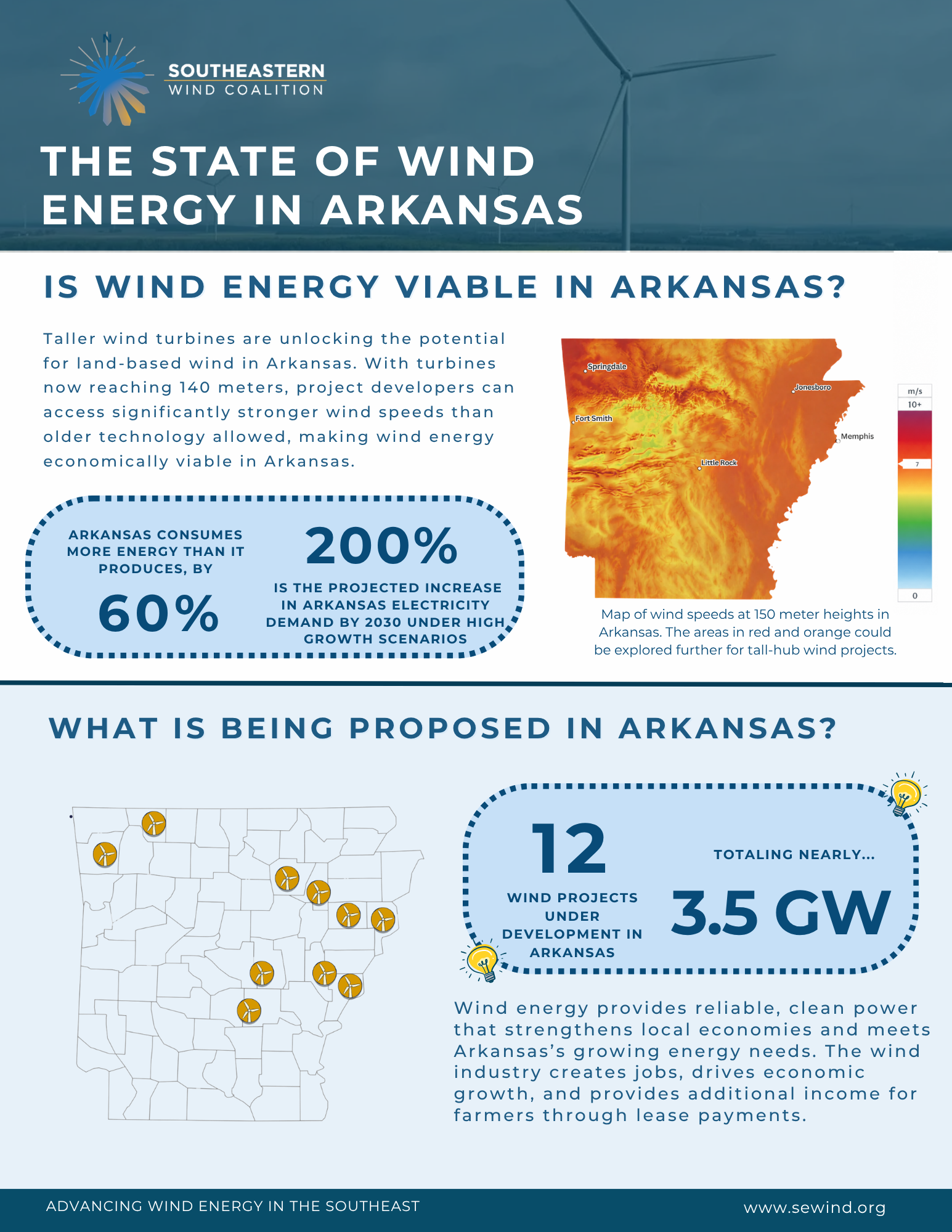
The State of Wind Energy in Arkansas
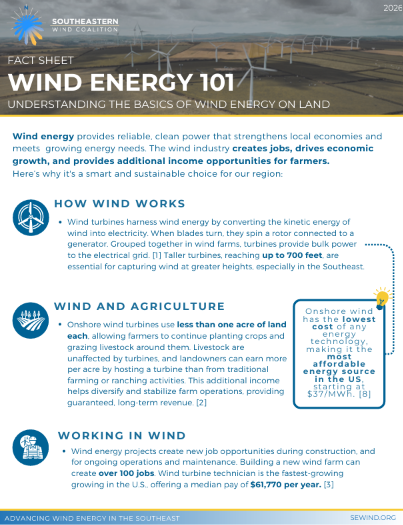
Wind Energy 101

Wind Farms and Recreational Hunting
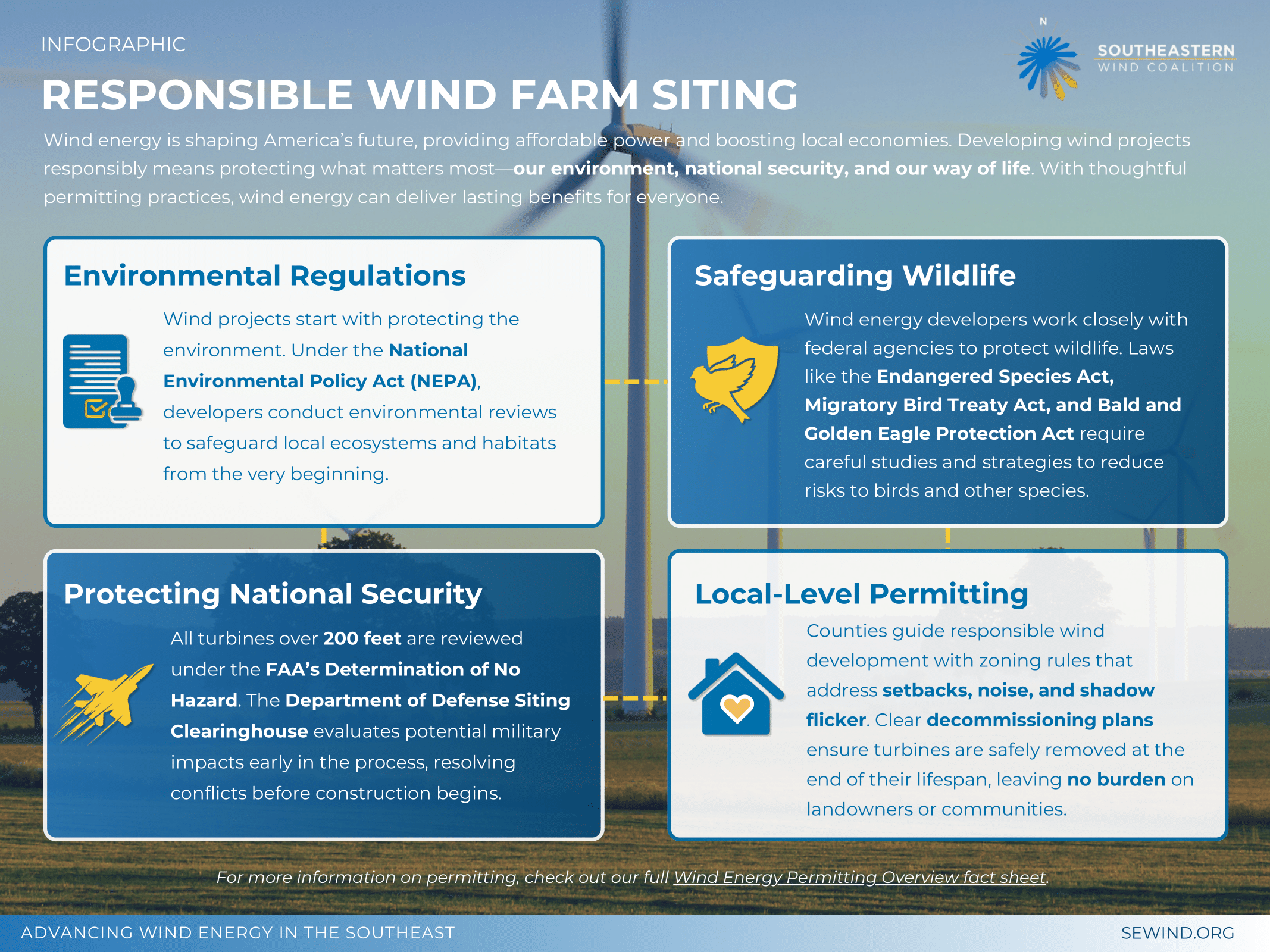
Infographic: Responsible Wind Farm Siting

Unexpected Benefits of Wind Fact Sheet

Wind Energy Permitting

Wind Farms and Agriculture