
For Immediate Release: November 16, 2026
Media Contact: Lauren McKinnis, laurenm@sewind.org
RALEIGH, NC – The Carolinas Development Assistance and Siting Hub (DASH), an initiative led by the NC Clean Energy Technology Center (NCCETC) at NC State University, in partnership with the Southeastern Wind Coalition (SEWC), has announced the publication of a model ordinance for utility-scale land-based wind development. The document is a result of several months of information gathering and stakeholder engagement with representatives from utilities, renewable energy project developers, local governments, non-profit organizations, trade associations, and agriculture.
The Carolinas Utility-Scale Wind Model Ordinance is intended to be used by North and South Carolina jurisdictions as a starting point to implement or update their own utility-scale wind development regulations. This ordinance is designed to function as a living document that will evolve with the state policy landscape, technological innovations, and industry best practices. The ordinance release is part of the Carolinas DASH mission to provide educational resources regarding large-scale energy siting and permitting in the Carolinas under the Reliable Energy Siting through Technical Engagement and Planning (R-STEP) program funded by the U.S. Department of Energy Integrated Energy Systems Office.
“Taller turbines have unlocked opportunities for land-based wind across the Southeast, including North and South Carolina. We’re pleased to offer this model ordinance as a resource for local governments across the Carolinas to help support informed decision-making around wind energy siting and development,” said Jocelyn Juliano, Program Manager at Southeastern Wind Coalition.
The model ordinance outlines provisions for siting and design, permit requirements, application elements, and decommissioning of land-based wind. Informed by input from stakeholders throughout the process, and recognizing that approaches may vary across jurisdictions, the ordinance also includes endnotes and appendices that provide additional guidance on different elements, including an explanation guide, local benefit mechanisms, and community engagement best practices.
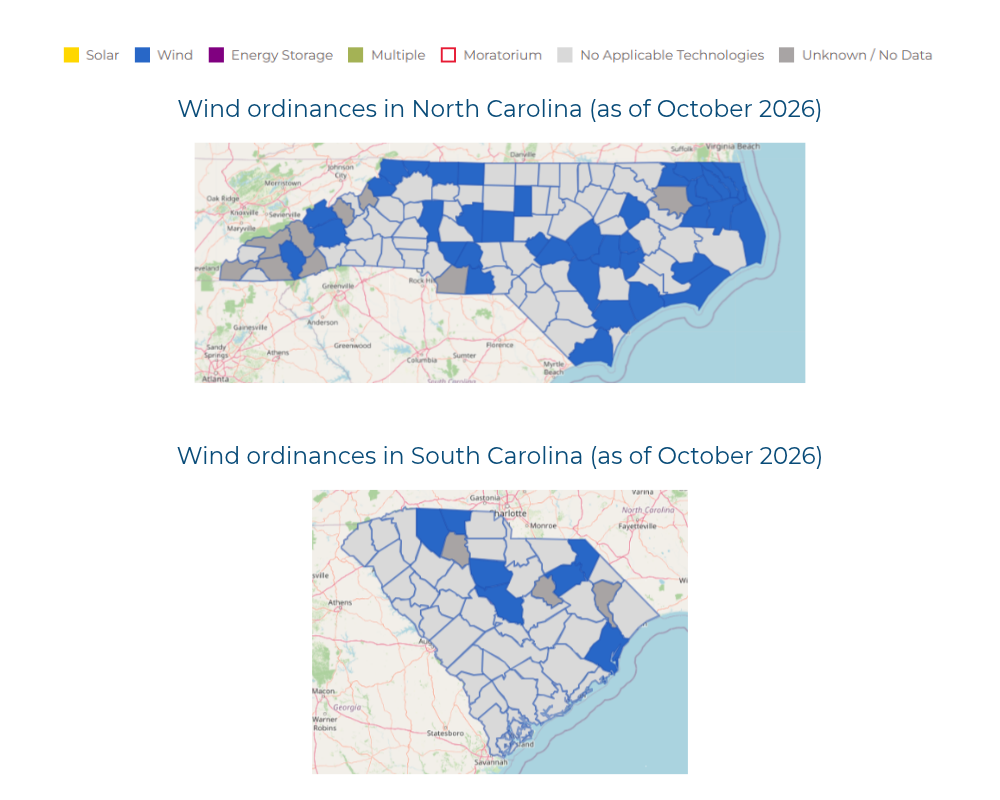
“Since the NCCETC last helped develop a North Carolina wind model ordinance in 2008, utility-scale wind energy has become a more common resource in growing pockets of the country,” noted Caitlin Flanagan, a Policy Analyst at the NCCETC. “In North and South Carolina, there is existing opportunity for communities to adopt their own wind ordinance or revisit current provisions. We hope that by incorporating new insights from wind project development and adding explanatory resources, this modernized model ordinance will be helpful to local governments and the communities they serve.”
About the NC Clean Energy Technology Center: The NC Clean Energy Technology Center (NCCETC), as part of the College of Engineering at North Carolina State University, advances a sustainable energy economy by educating, demonstrating, and providing support for clean energy technologies, practices, and policies. It serves as a resource for innovative, sustainable energy technologies through technology demonstration, technical assistance, outreach, and training. For more information about the Center, visit: https://www.nccleantech.ncsu.edu
About the Southeastern Wind Coalition: The Southeastern Wind Coalition (SEWC) is a non-profit that works to advance the land-based and offshore wind industry in the Southeast. SEWC focuses its efforts on economic development and supply chain growth through wind energy development. For more information about the Coalition, visit: https://www.sewind.org.
About the Carolinas DASH: The Carolinas Development Assistance and Siting Hub (DASH) provides technical assistance and education to local governments in North and South Carolina. Led by the NC Clean Energy Technology Center in partnership with regional stakeholders, the hub is designed to help communities make informed, balanced decisions regarding renewable energy siting and permitting.
The full model ordinance and additional technical resources are available at: carolinas-dash.org
About the Integrated Energy Systems Office: The U.S. Department of Energy Integrated Energy Systems Office drives research and development of energy solutions that enhance grid reliability and resilience, foster U.S. technological leadership, and reduce the cost of energy for Americans.
Media Contact:
SEWC Contact: Lauren McKinnis laurenm@sewind.org
NCCETC Contact: Gena Renfrow earenfro@ncsu.edu
