
Lessons from Madrid: A View of the Global Wind Industry
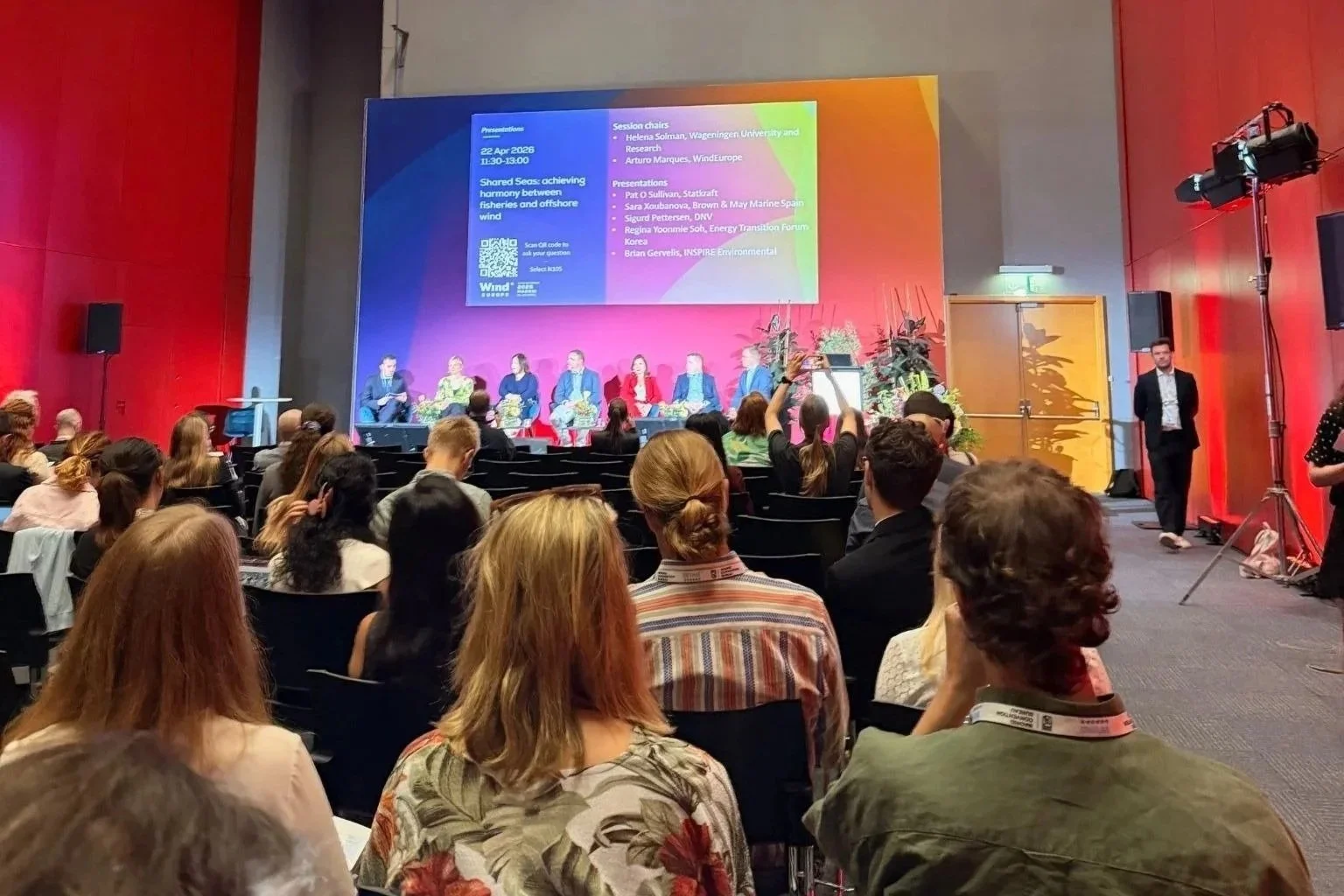
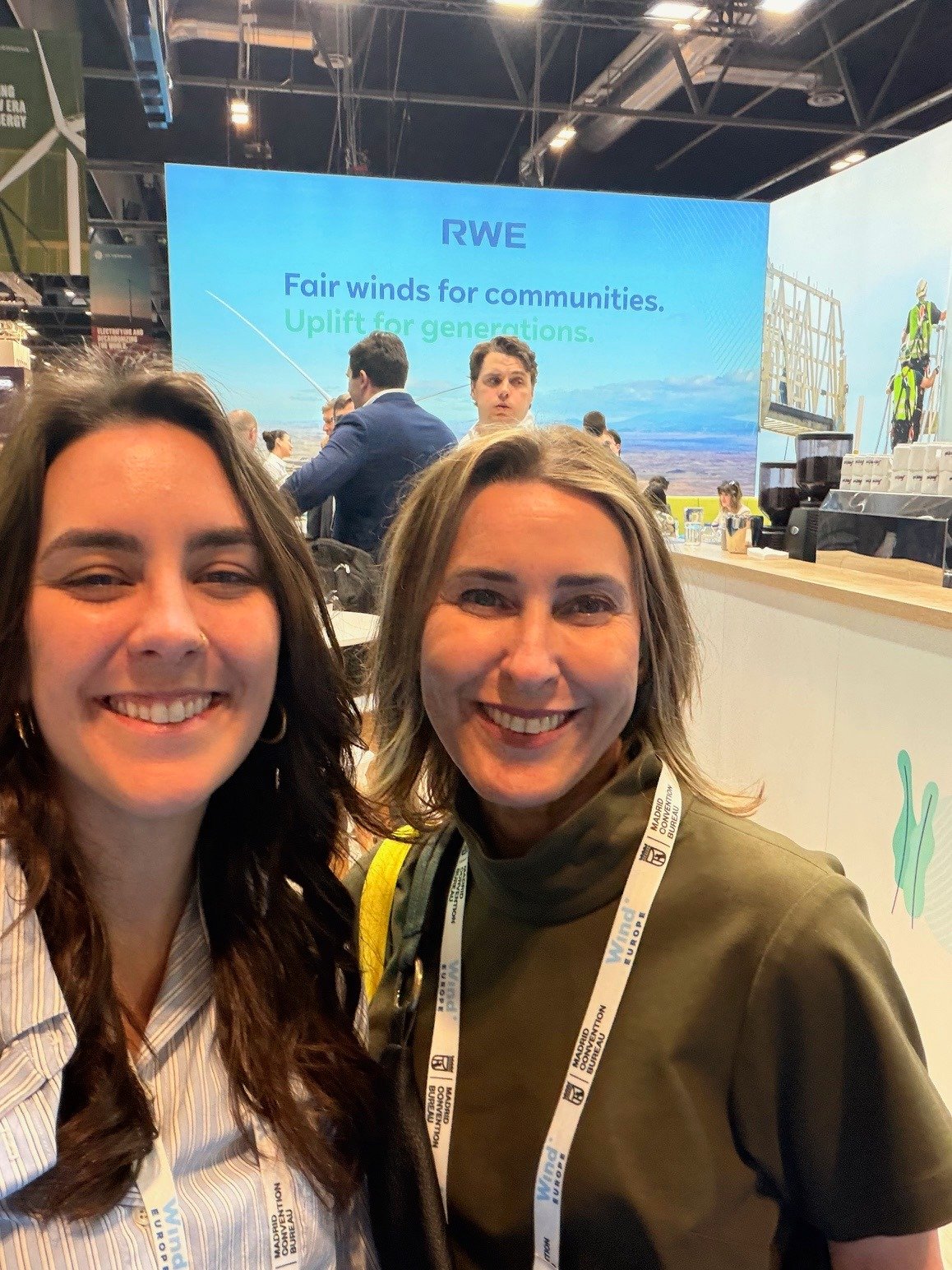
Last week, I was invited by CPEX Executive Director Camille Manning Broome to travel to Madrid, Spain, for Wind Europe 2026, one of the world's largest wind energy conferences and trade shows. For someone new to working in wind energy, to say it was eye-opening would be an understatement. From the scale of the exhibition floor to the panel discussions featuring experts across multiple countries, the conference offered a lens into where the global wind industry stands and where the U.S. has room to grow.
This week, energy think tank Ember released its annual review of global electricity generation, and the headline is worth pausing on: 2025 was the first year in history that renewables outpaced coal worldwide. Solar, wind, hydropower, and biofuels collectively delivered just under 34% of the world's power, edging out coal at 33%. Wind Europe showed me what the global momentum and coordination have looked like to reach this milestone.
The Theme: Energy as Security
The central theme of Wind Europe 2026 was the importance of energy security for national sovereignty. The European Union’s reliance on imported fossil fuels from Russia and the Middle East has made energy vulnerability a political reality, and the EU understands wind energy as a pillar of its national security that should be protected and invested in. European policymakers are actively developing robust domestic wind energy projects as a solution for more homegrown power and less risk exposure to global volatility.
Europe’s Robust Wind Energy Supply Chain
Wind Europe 2026 hosted 624 exhibitors (the most in the event's history) representing the breadth of a global supply chain: turbine manufacturers, offshore developers, component manufacturers, logistics providers, turbine repowering companies, and everything in between (even an offshore porta-potty company!). Numerous exhibitors were marketing solutions to concerns that still dominate the conversation in the U.S., including technologies to make turbines quieter and reduce impacts to birds and bats. It was amazing to see how solutions to these common concerns are already being built and sold at scale abroad.
Less than 3% of the 624 exhibitors at WindEurope were U.S.-based. At a moment when countries around the world are racing to expand domestic energy production, the absence of more U.S. companies in the wind supply chain feels like a missed opportunity for both American businesses and American leadership in an industry poised for a leading role in the next era of global energy production.
Similarities and Differences With the U.S.
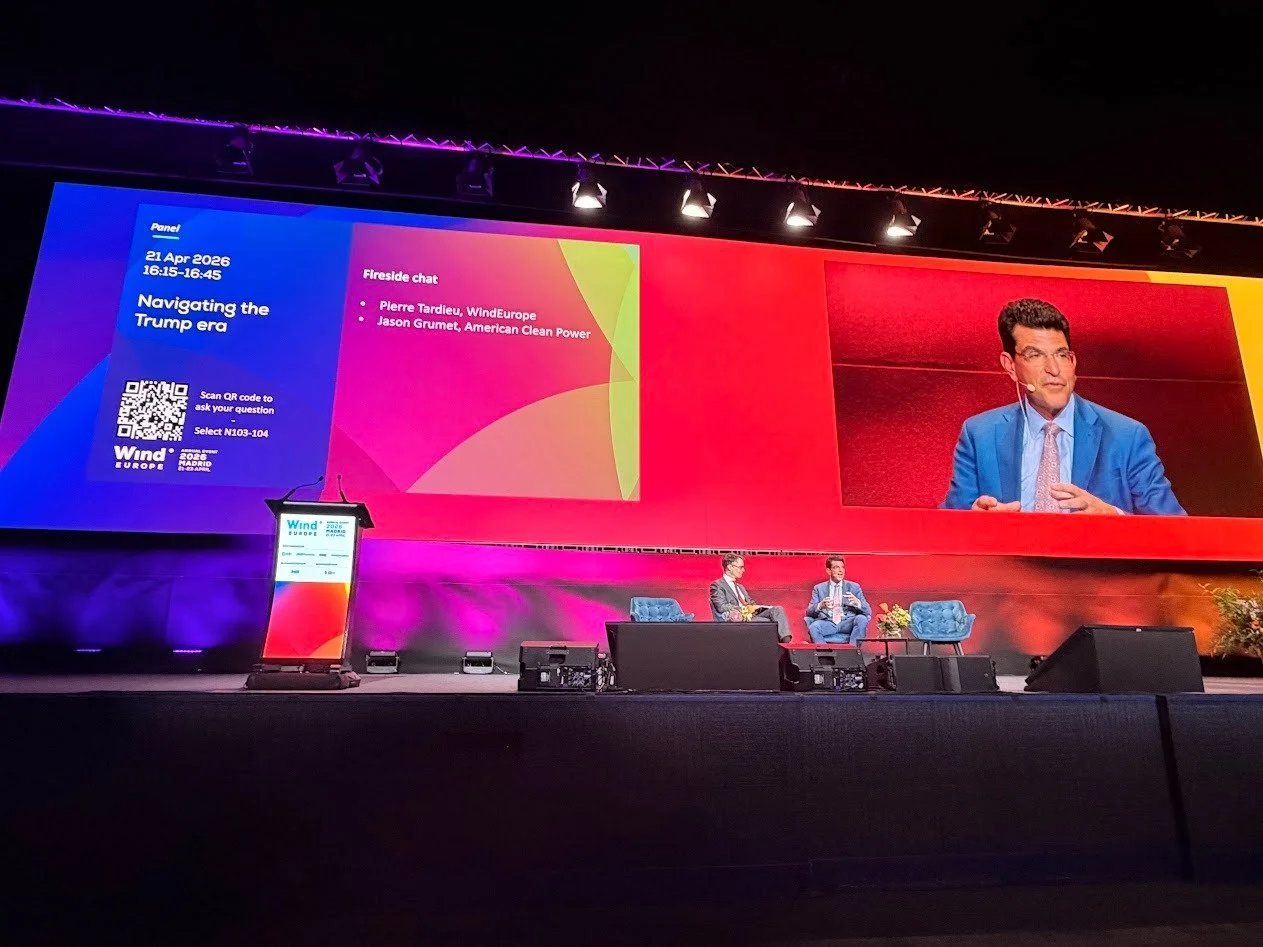
What struck me most about the panel discussions wasn't how different the conversations were from the United States; it was how similar they were. Discussed throughout the conference were issues of affordability, load growth driven by data centers and electrification, permitting bottlenecks and the need for reform, transmission constraints, long interconnection queues, community opposition, misinformation, and national security. Despite the advanced deployment of renewables in Europe, these issues are not uniquely American problems. They are the shared friction of global energy markets undergoing massive change.
The difference is in how Europe approaches these challenges. There is a level of alignment and collaboration across governments, regulators, and industry in support of wind energy that allows them to collectively pool shared resources in pursuit of common goals.
The Hamburg Declaration is a concrete example of what that looks like in practice. Signed in January at the North Sea Summit in Hamburg by Britain, Germany, Denmark, France, the Netherlands, and six other nations, the Declaration is a joint offshore wind investment pact committing to 100 GW of offshore wind through large-scale cross-border projects, with governments pledging to build out 15 GW annually from 2031 to 2040. In exchange for this government commitment, the European wind industry pledged to cut offshore wind costs by 30% by 2040. It is the kind of mutual commitment from government and industry that gives an entire supply chain the confidence to invest in factories, ports, and workforce. These collaborations are helping Europe become a leader in the wind energy industry globally.
What I Brought Home to New Orleans
Leaving Madrid, I felt more optimistic about the future of wind energy. The wind industry is mature, global, and invested in solving the challenges of today's energy system. The question for us in the Southeast, and in the U.S. more broadly, is whether we'll show up to claim our place in this growing, global industry.