
How Onshore Wind is Strengthening Rural Economies & Family Legacies in North Carolina
Karly Brownfield is SEWC’s Central Atlantic Senior Program Manager, leading the Coalition’s work to reduce barriers to onshore and offshore wind development across Virginia and the Carolinas.
On a windy morning in November 2025, I ventured to northeastern North Carolina to join Apex Clean Energy and partners to celebrate the presentation of a nearly $750,000 property tax payment to Chowan County officials. After nine years of planning and outreach, it was extraordinary to be present for the first of many annual payments that will make Timbermill Wind the county’s single largest taxpayer, equaling more in property taxes this year than last year’s top nine taxpayers combined.
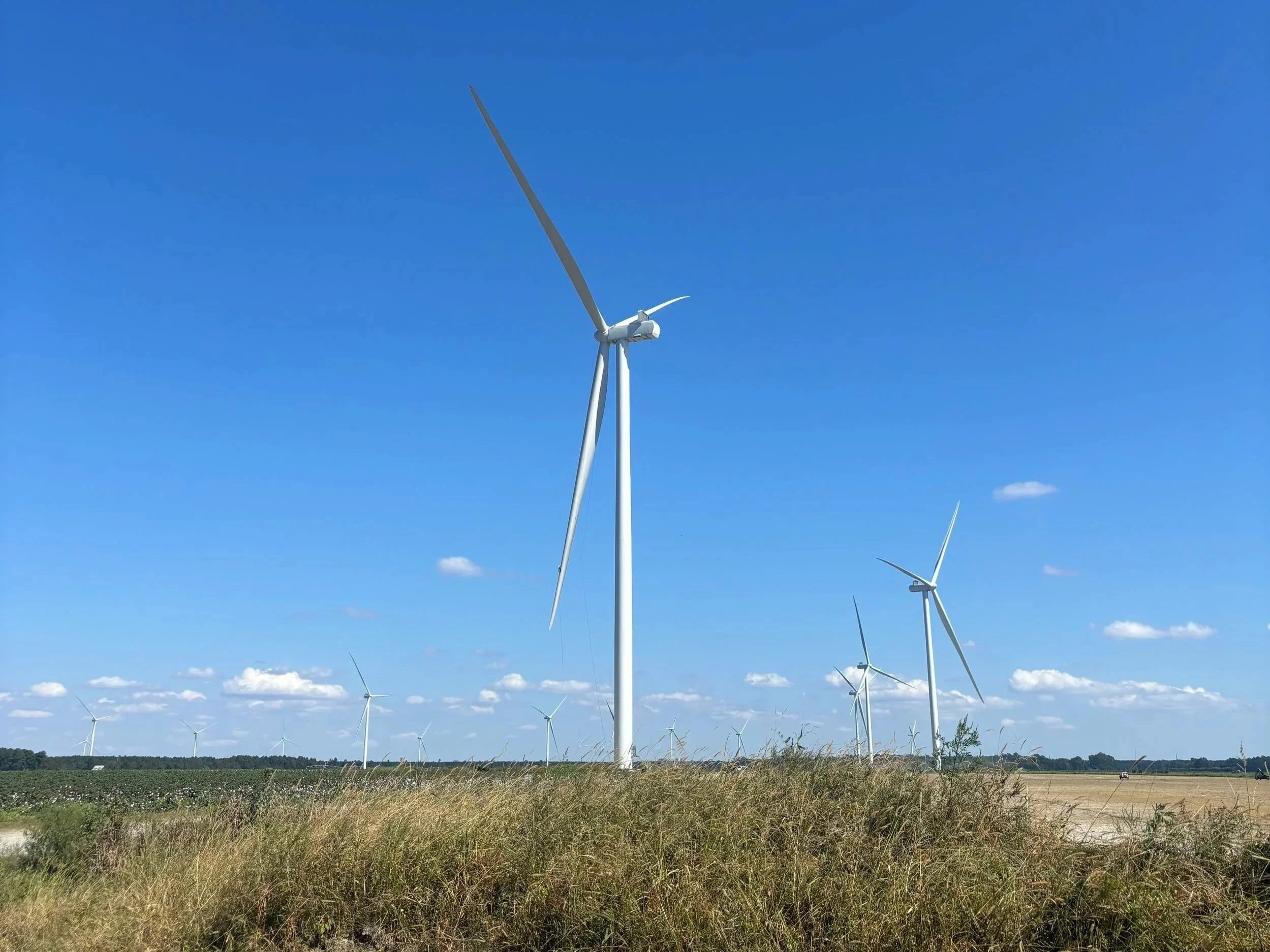
Timbermill Wind, the second wind farm in North Carolina, began construction in May 2023 and started generating clean, homegrown energy the following December in 2024. Over its 30-year lifespan, the project is expected to provide more than $50 million in tax revenue to Chowan County. While this investment will strengthen the local economy and support public services, Timbermill Wind also delivers a significant and often overlooked benefit to an essential group of people and their family legacies: farmers.
Farmers and other local landowners who host wind turbines receive long-term lease payments that provide a steady, predictable source of income. At Timbermill Wind these payments will support more than 30 landowners across rural Chowan County for decades. The project is located on open farmland and managed timberland in rural Chowan County, and each wind turbine occupies less than half an acre of land. This allows farmers to continue working their fields while gaining a reliable source of income.
During the event, County Commissioner Bob Kirby shared the history of the project and emphasized how sustained tax revenue will support emergency services, public schools, and local infrastructure, such as roads. When he started talking about the benefits to landowners hosting turbines for the project, he became noticeably emotional. "...these lease benefits do so much to preserve family legacies," said Commissioner Kirby.
That message reflects a broader trend of agricultural heritage slipping away across the state. According to the latest agricultural census, the average age of farmers in North Carolina is 58 years old, and roughly 57% rely on secondary income to make a living. At the same time, total farmland in the state has declined while average farm size has increased. This translates into fewer family farms and an aging workforce in a corner of the state where agriculture is a legacy for many generations and a major economic driver for the region.
As development pressure grows in the Southeast, family farms will continue to be at risk, especially in places like North Carolina that are predicted to have some of the highest amounts of land conversion in the country. Projects like Timbermill Wind can protect the legacies of family farms by diversifying income through dependable lease payments. This financial stability can be invaluable for those trying to keep their family land in farming for future generations.
From my perspective, Timbermill Wind is a strong success story for onshore wind in the Southeast. With the right policies in place, other projects can replicate this success in communities across the region. The Southeastern Wind Coalition will continue to work with policymakers and stakeholders to tell the story of projects like Timbermill Wind in an effort to advance responsible wind energy development throughout the region.
To receive updates from Timbermill Wind visit here. Learn more about the history and powerful impact of Timbermill Wind, watch this video.
