
Bringing Wind Energy Conversations to the Mississippi Delta
By Sarah Eazzetta, Program Associate, Central States
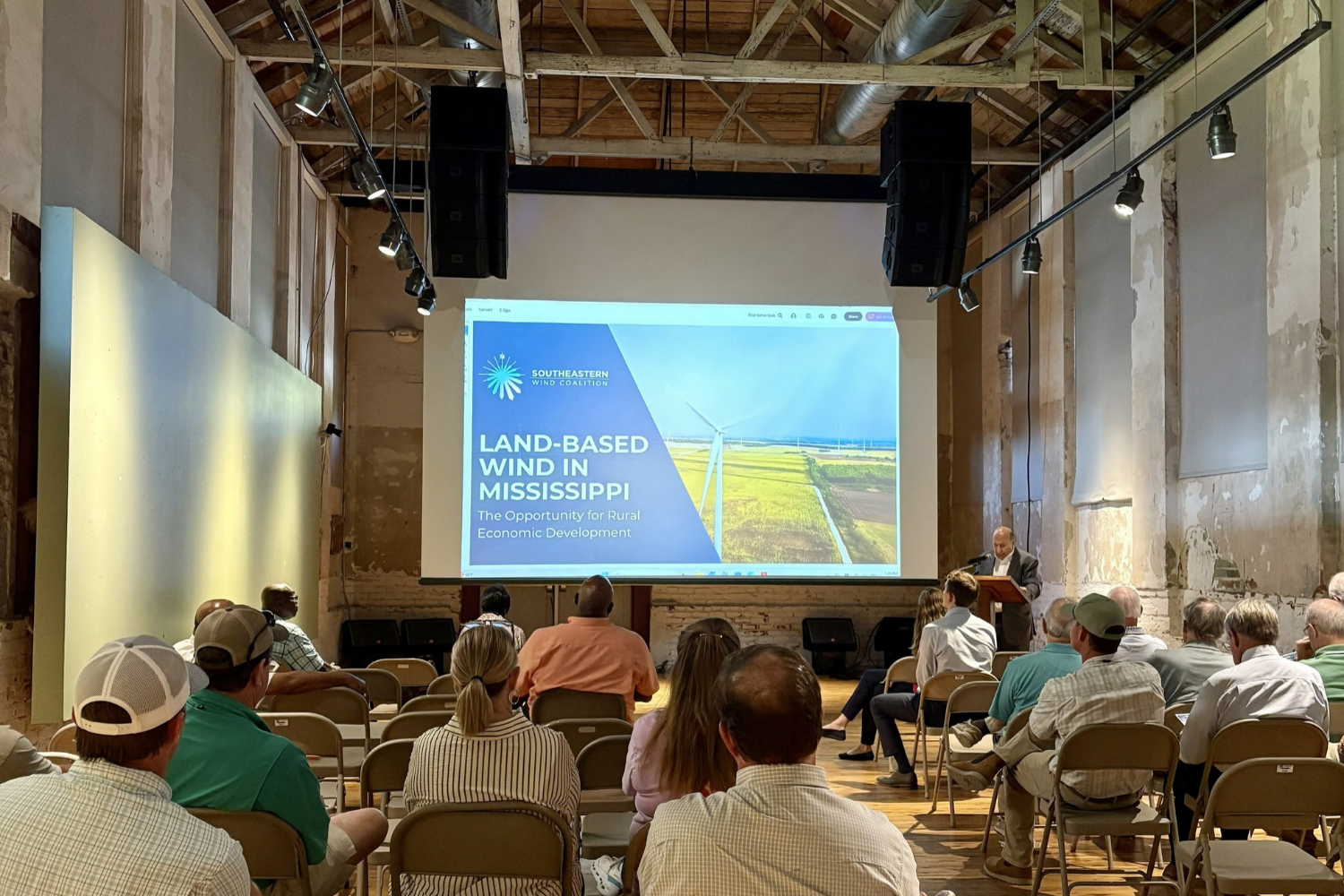
On September 15, the Southeastern Wind Coalition (SEWC) joined Sunflower County Economic Development to host Wind Energy in the Delta: A Community Conversation at the B.B. King Museum in Indianola, Mississippi. The event brought together 25 community members, including farmers, landowners, agricultural aviators, and local officials from Sunflower County and surrounding communities for an open conversation about wind energy and what development could mean for the Mississippi Delta.
On our drive from Little Rock, Arkansas, to Indianola, Mississippi, farmland stretched for miles in every direction, a reminder of how deeply farming defines both the Delta’s economy and its identity. Along the way, we passed the Delta Wind project in Tunica County, where turbines rise above active fields and crops grow right up to their base. The project exemplifies the message we hoped to share in Indianola: wind is a viable resource in the Delta that brings real benefits to farming communities. It generates new income for landowners and new property tax revenue for the county, all while keeping the land in production.
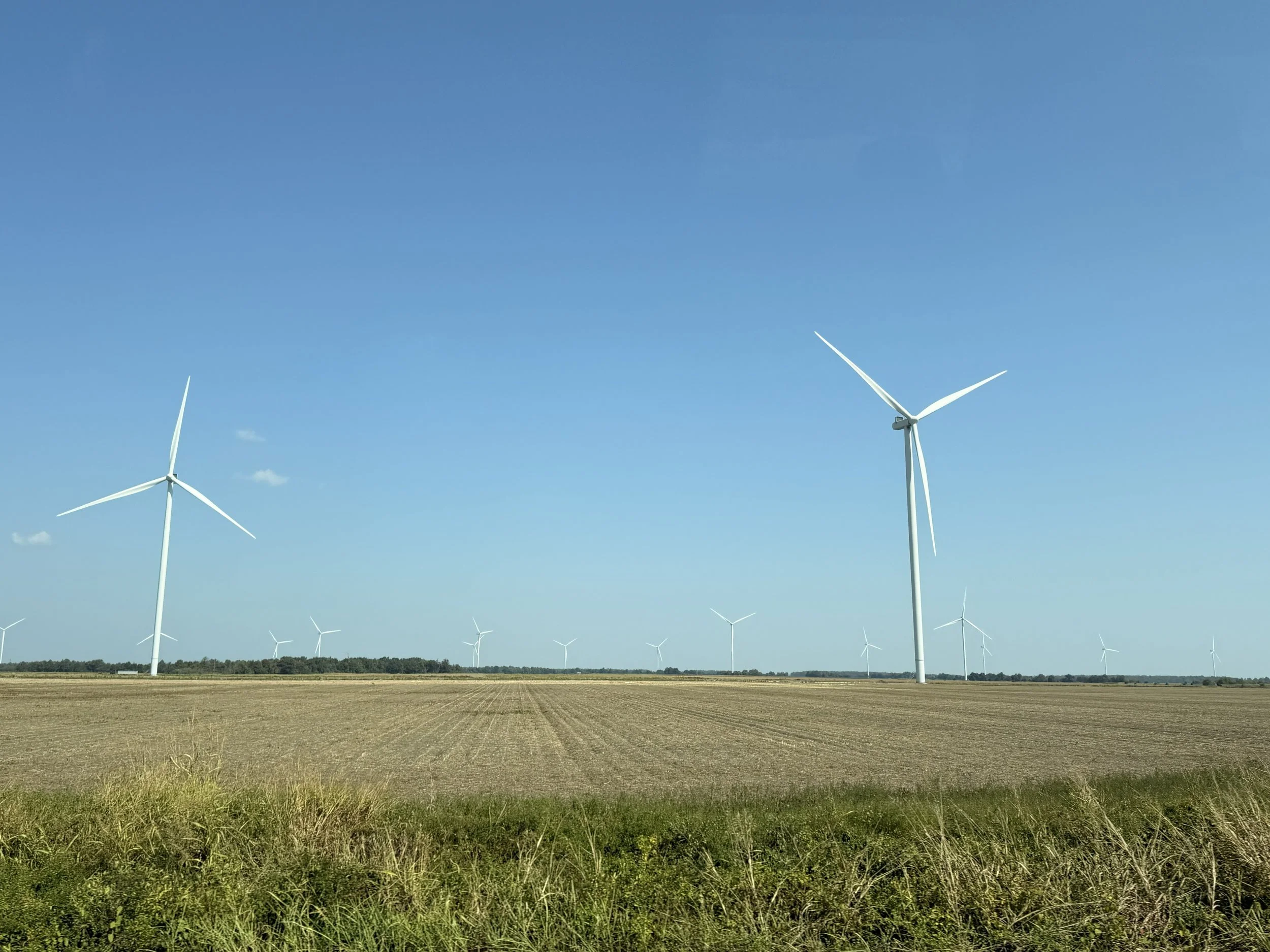
Delta Wind Farm - Tunica County, MS
Steve Rosenthal, Executive Director of Sunflower County Economic Development, opened the evening by explaining why they hosted this conversation. His job is to bring new opportunities to the county, and he sees wind energy as a path worth exploring. SEWC followed with the basics of wind energy, the development process, and the benefits wind brings to farmers and counties. Daniel Sepulvado, who works on Mississippi's R-STEP program, a state initiative that gives local officials free expert support on wind and solar siting and ordinances, then addressed common community concerns, from property values and noise to setbacks, decommissioning, and agricultural aviation.
What the Community Wanted to Know
While the presentations set the stage, most of the evening was spent in open Q&A, and it was clear attendees had given wind energy real thought, arriving with plenty of questions.
Attendees were curious about what a turbine looks like below the surface and how it interacts with the land around it. They asked how deep the foundations go, how construction could affect the local environment, and specifically whether it could impact the aquifer that Delta farmers depend on. Several wanted to know whether these impacts are evaluated through local studies or based on national data, a clear signal that communities want evidence that reflects their own land and conditions.
Agricultural aviators, whose work is central to farming in the Delta, asked about the distance between the bottom of the blade and the ground where they fly, and explained that in the Great Plains and the Midwest, where fields may be sprayed once a year, working around turbines is more manageable than in the Delta, where aerial applications occur multiple times throughout the growing season. They also asked why turbines are often laid out in patterns that can look haphazard, which can make flight paths more difficult to navigate.
Residents and local officials also wanted to know where the electricity produced would actually go and whether it would serve the local community either directly or by lowering prices. Others raised questions and shared opinions about tax abatements and why they are a common practice in the wind industry, asked whether wind projects actually turn a profit, and wanted to understand how project revenue is distributed within a county.
Why These Conversations Matter
Conversations like this are at the heart of SEWC's work. We aren't a developer; we're a nonprofit that believes in the benefits wind energy can bring to communities in the Southeast. Our role is to help people understand their options, ask questions, and make decisions that are right for their communities. We can help the wind industry fulfill the “early and often” principle of community engagement by equipping communities with information about the wind energy before any projects materialize. We look forward to continuing this work with farmers, landowners, and local leaders across Mississippi and the broader Delta region.