
What I Learned Standing Under a Wind Turbine
By Jocelyn Juliano, Program Manager, Central Atlantic
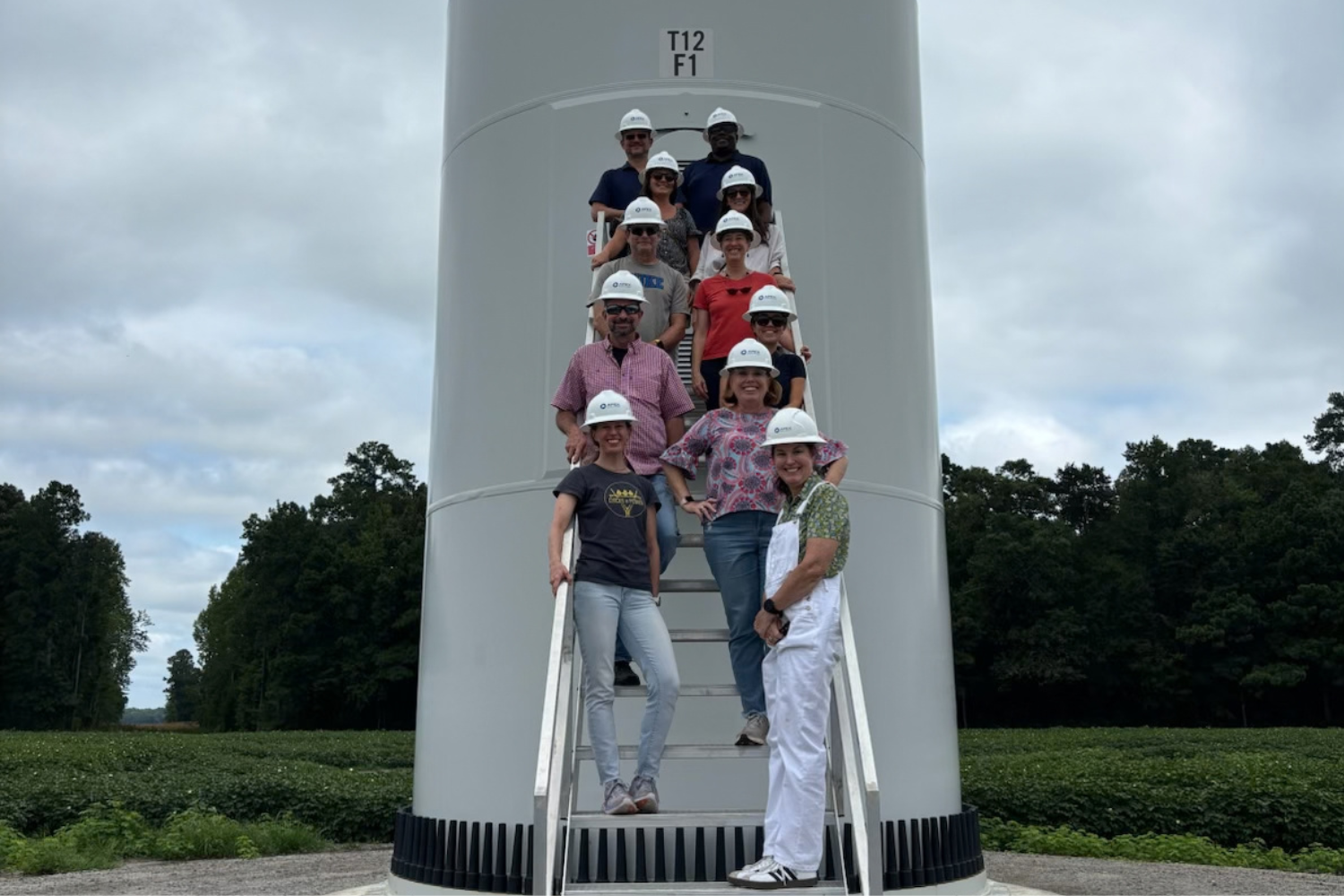
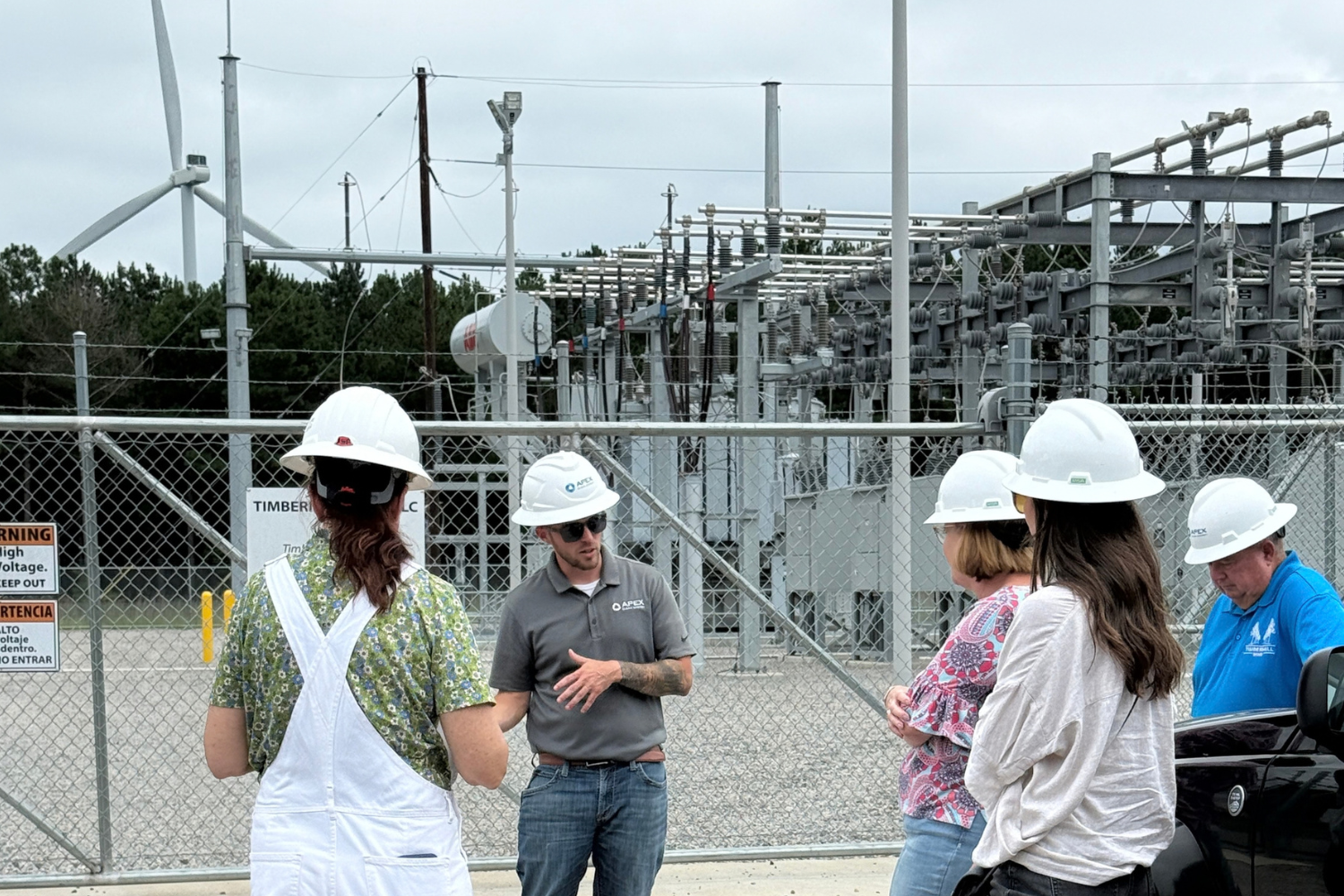
After a day spent Networking at Sea, we shifted focus to onshore wind energy development with a tour of the Timbermill Wind Farm in Edenton, NC. We were joined by the Timbermill Wind Farm Facility Manager, Tyler Finley, along with retired county economic development professionals who serve as project liaisons to the community. The tour provided direct insight into how the project moved from construction to operation, what daily operations and maintenance look like today, and the economic impacts the project has brought to Chowan County.
Our guides shared stories from the early days, including the challenges and successes of siting and constructing the project and officially bringing it online in 2024. They talked about the growing pains the community worked through, and how today, the wind farm is just part of the landscape. In fact, if a turbine isn't spinning, they get calls from concerned neighbors making sure everything's okay, only to learn the turbine is down for routine maintenance. Indeed, there were hiccups with landowners along the way, but the team shared how they worked through those concerns and resolved problems as they came up.
What stood out most was one liaison’s observation that, once the wind farm was built, the negative assumptions disappeared. The turbines were there, and all the bad things people predicted just didn't happen.
Timbermill Wind is the largest taxpayer in North Carolina's smallest county and is expected to contribute $50 million in tax revenue to Chowan County over its 30-year lifespan. The turbines are located partly on Weyerhaeuser-owned timberland and partly on privately owned land. Lease payments to landowners choosing to host turbines on their property can be life-changing. And for turbines hosted on farmland, the land can continue to be farmed, with crops like soybeans, cotton, and corn growing right around them.
Seeing the wind farm firsthand lets decision-makers and stakeholders experience the sheer physical scale of these installations, appreciate the investment and workforce it takes to build them, and understand the positive economic impacts brought to communities.
The thoughtful questions and reactions showed just how much interest there is in these projects. Hearing the firsthand experiences and lessons learned from the people who work on them every day added a perspective you just can’t get from a presentation or report. Sometimes you have to get out there and see it for yourself. That’s what I learned standing under a wind turbine, and why these tours are worth the trip.
